Fiddle Leaf Fig
Ficus lyrata
Sensitive to being moved once it finds its spot. Give it stable conditions and it rewards you with rapid vertical growth and large, architectural leaves. Move it constantly and you'll have a very expensive stick.
Buy this plant $28 In Stock- Light
- Bright Indirect
- Humidity
- 40%+
- Temperature
- 65-80°F
Light Requirements
Bright Indirect. Place within 3-5 feet of a south or east-facing window, out of direct sun. Direct afternoon sun will scorch leaves.
Watering
Let the top 2 inches of soil dry out before you water again. That's roughly every 7-10 days in warmer months. When you do water, soak it thoroughly until it drains from the bottom. Inconsistent moisture is the main culprit for most problems, not the amount of water itself.
Humidity
Target humidity: 40%+. Average home humidity of 40-50% is usually sufficient. Avoid placing near heating vents, which dry the air significantly.
Temperature
Keep between 65-80°F. Avoid cold drafts from windows in winter and hot air from vents year-round. Most tropical houseplants suffer below 55°F and should never be exposed to frost.
Soil and Potting
A well-draining, nutrient-rich mix at pH 6.0-7.0. Blend peat moss or coco coir with perlite and pine bark. It should hold some moisture but drain fast enough that the roots never sit in water.
Propagation
Take a stem cutting with 1-2 leaves and one node, set it in room-temperature water under bright indirect light, and change the water every few days. Roots appear in 4-6 weeks. For larger specimens, air layering is more reliable: wound a healthy stem, pack the wound with moist sphagnum, wrap in plastic, and cut below the rooted section after 6-10 weeks.
Common Problems
If it suddenly drops leaves, something changed. A draft, a new location, a temperature swing. Figure out what changed and stabilize it before you try to fix the plant. Brown spots in the center of leaves (not the edges) usually mean bacterial infection from overwatering. Edge browning is a humidity issue.
Worth Knowing
- Fiddle leaf figs calibrate themselves to the specific light, temperature, and humidity of the spot they're in. Move one across the room and it will drop leaves like it's filing a formal grievance. Find a spot with good bright indirect light, put it there, and don't touch it. Every relocation basically resets the relationship.
- In its native West African rainforest, Ficus lyrata is a hemi-epiphyte. Seeds germinate up in the canopy, then the plant sends roots all the way down to the ground, sometimes strangling the host tree in the process. Your polite little indoor tree has a complicated backstory.
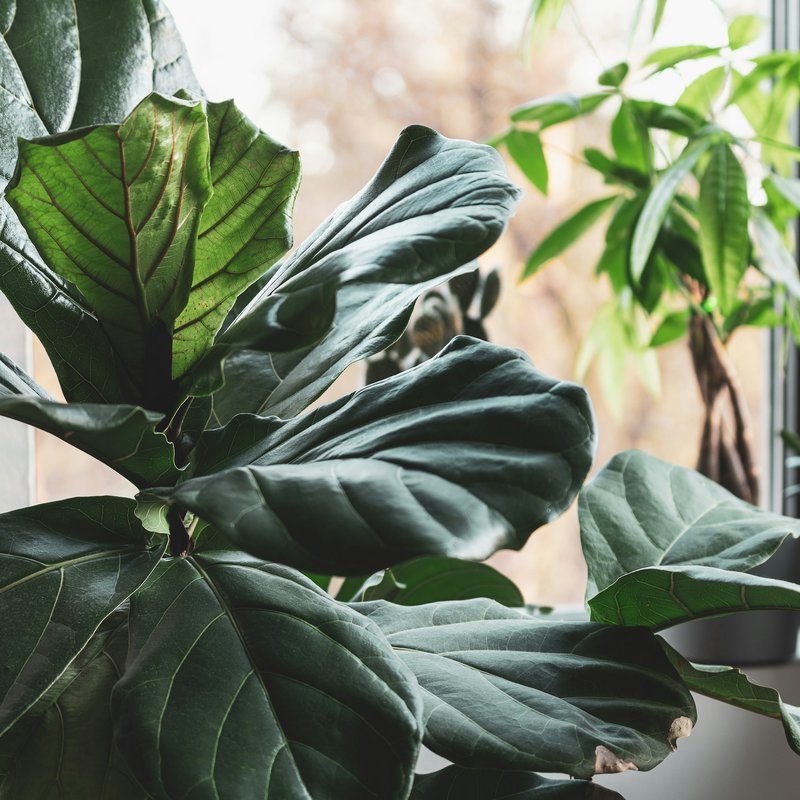
- The species name lyrata refers to the leaf shape, which resembles a lyre. That's the direct line from the Latin to the common name fiddle leaf fig. So the name is actually accurate, which is rarer than you'd think in common plant naming.
Toxicity
Toxic to cats and dogs. The sap contains calcium oxalate crystals plus ficin, a proteolytic enzyme that can cause skin irritation and GI upset if ingested.