Hoya Kerrii
Hoya kerrii
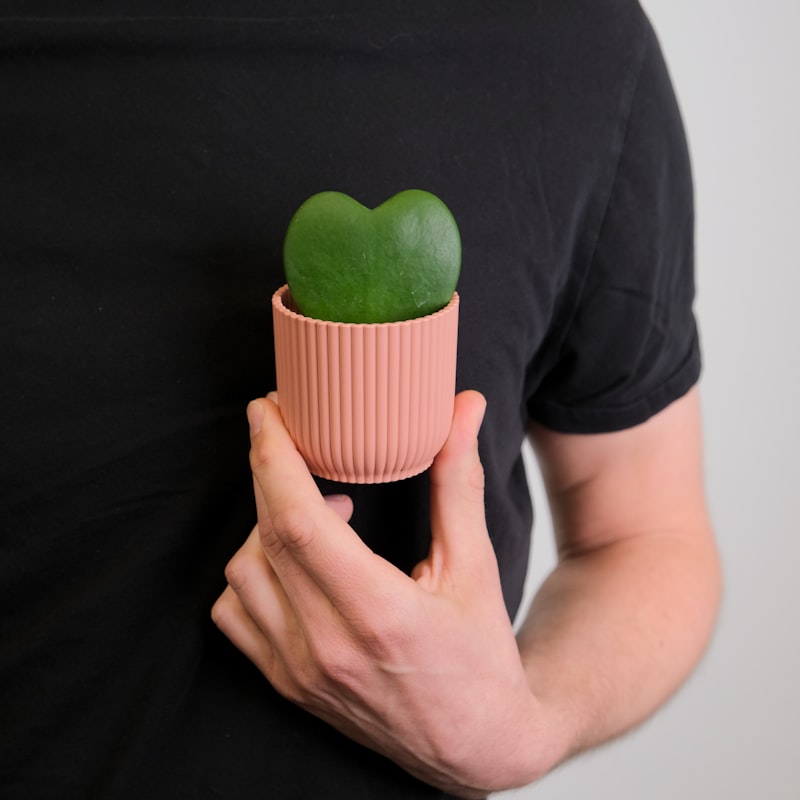
Single-leaf cuttings sold as sweetheart plants will never grow past the one leaf. We sell ours as multi-node vining plants that will actually develop.
Buy this plant $18 In Stock- Light
- Bright Indirect
- Humidity
- 40-60%
- Temperature
- 65-80°F
Light Requirements
Bright Indirect. Place within 3-5 feet of a south or east-facing window, out of direct sun. Direct afternoon sun will scorch leaves.
Watering
Every 7-10 days in summer, every 14-21 days in winter. Let the top 1-2 inches dry before you water. It's a semi-succulent, so it handles drought well. Overwatering shows up as yellow leaves and a mushy base. Underwatering shows up as wrinkled, slightly limp leaves that firm back up after you water. The limp leaf is actually useful feedback.
Humidity
Target humidity: 40-60%. Average home humidity of 40-50% is usually sufficient. Avoid placing near heating vents, which dry the air significantly.
Temperature
Keep between 65-80°F. Avoid cold drafts from windows in winter and hot air from vents year-round. Most tropical houseplants suffer below 55°F and should never be exposed to frost.
Soil and Potting
Fast-draining is the whole point: 40% cactus mix, 30% orchid bark, 20% perlite, 10% compost. Or just cut standard potting mix 50/50 with perlite and orchid bark. Terracotta pots help by wicking excess moisture away from the roots.
Propagation
Don't bother with a single leaf cutting. Without a node, it'll root and then just sit there as a single leaf forever. That's not propagation; that's decoration that's slowly eating your time. For actual propagation, take a stem with at least 3 nodes, root it in water with the nodes submerged and leaves above the waterline. Roots appear in 3-6 weeks; transplant when they're 1-2 inches long.
Common Problems
Every Valentine's Day, stores sell single heart-shaped Hoya leaves in tiny pots. Cute, right? Here's the problem: those will never grow. They're cut without a node, so the leaf roots and then just... sits there. For years. It's honestly one of the oldest tricks in the plant industry, and it works every February like clockwork. If you want one that actually does something, buy one with a stem. The other thing to never do: cut the flower spurs after blooming. New flowers regrow from the same spur the following year. Cut it, and you're waiting years for new spurs to develop.
Worth Knowing
- In its native range across Thailand, Laos, Cambodia, Vietnam, and southern China, Hoya kerrii is a climbing vine. The compact little heart-shaped plants sold in garden centers are juvenile specimens. Mature wild plants have leaves far larger than anything you'd recognize from the nursery shelf.
- Flowers appear on persistent peduncles (spurs) that rebloom year after year from the same point. The plant is essentially telling you where it plans to flower again. Cutting those spurs is a mistake you'll remember when no flowers appear the next season.
- The semi-succulent leaves store water as an adaptation to the seasonal dry periods in its native habitat. That's why it forgives you for skipping a watering or two, and why overwatering is more dangerous than underwatering with this one.
Toxicity
Non-toxic to cats and dogs.