
Monstera White Monster
Monstera deliciosa 'White Monster'
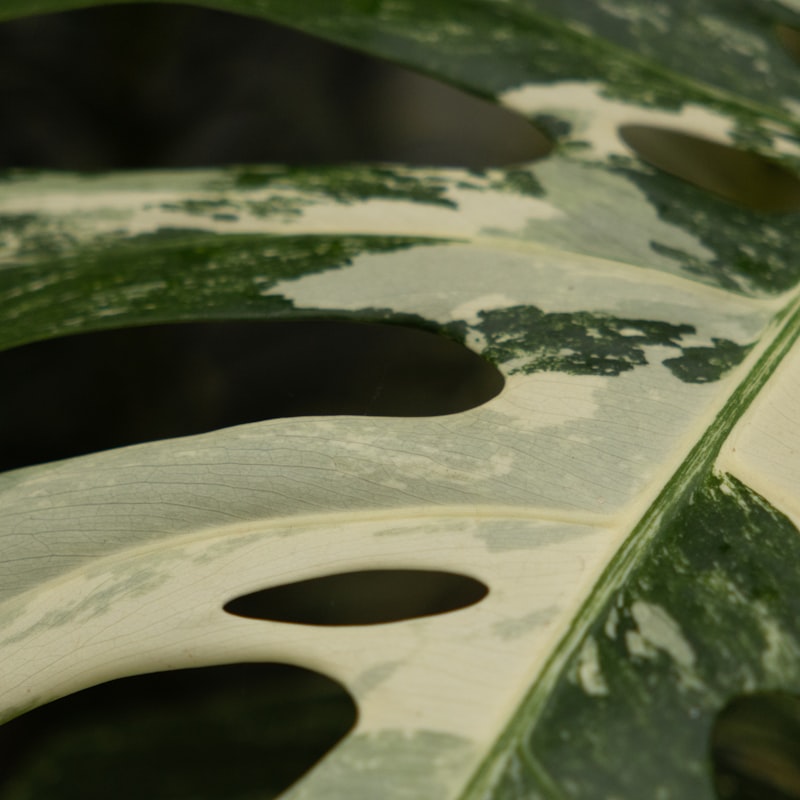
White sections are genetically incapable of photosynthesis. The green sections do all the work, which means the plant needs more light than a standard Monstera to stay healthy.
Buy this plant $95 Seasonal- Light
- Bright Indirect
- Humidity
- 50%+
- Temperature
- 68-86°F
Light Requirements
Bright Indirect. Place within 3-5 feet of a south or east-facing window, out of direct sun. Direct afternoon sun will scorch leaves.
Watering
Water when the top 2 inches of soil are dry, roughly once a week in active growing conditions. The white sections brown more readily during irregular watering. Empty saucers 15 minutes after watering.
Humidity
Target humidity: 50%+. Average home humidity of 40-50% is usually sufficient. Avoid placing near heating vents, which dry the air significantly.
Temperature
Keep between 68-86°F. Avoid cold drafts from windows in winter and hot air from vents year-round. Most tropical houseplants suffer below 55°F and should never be exposed to frost.
Soil and Potting
Well-draining aroid mix: standard potting soil amended with perlite and orchid bark. Optionally add charcoal. Must drain fast to prevent root rot while retaining some moisture.
Propagation
Select a cutting that includes visible white variegation in the stem tissue, not just the leaf. White in the stem predicts white in the next leaf. Root in moist sphagnum moss or water; highly variegated cuttings root more slowly because they produce less energy for root development.
Common Problems
Browning of white sections is common and partially normal, caused by low humidity, insufficient light, or water stress. Trimming with clean scissors is the only remedy as it is not reversible. Reversion to solid green means the plant needs more light.
Worth Knowing
- White Monstera variegation is a true genetic chimeric mutation, not virus-induced. This is why cuttings must be taken from variegated stems to reliably produce variegated offspring.
- The price collapsed dramatically between 2021 and 2024 as tissue culture propagation became widespread. Plants that sold for thousands of dollars during the COVID-era plant boom now sell for tens to low hundreds.
- Plants with very high white variegation (over 50% white per leaf) often fail to thrive long-term because the inert white sections cannot produce enough energy to sustain themselves.
Toxicity
Toxic to cats, dogs, and humans. Same calcium oxalate crystal mechanism as standard Monstera deliciosa.