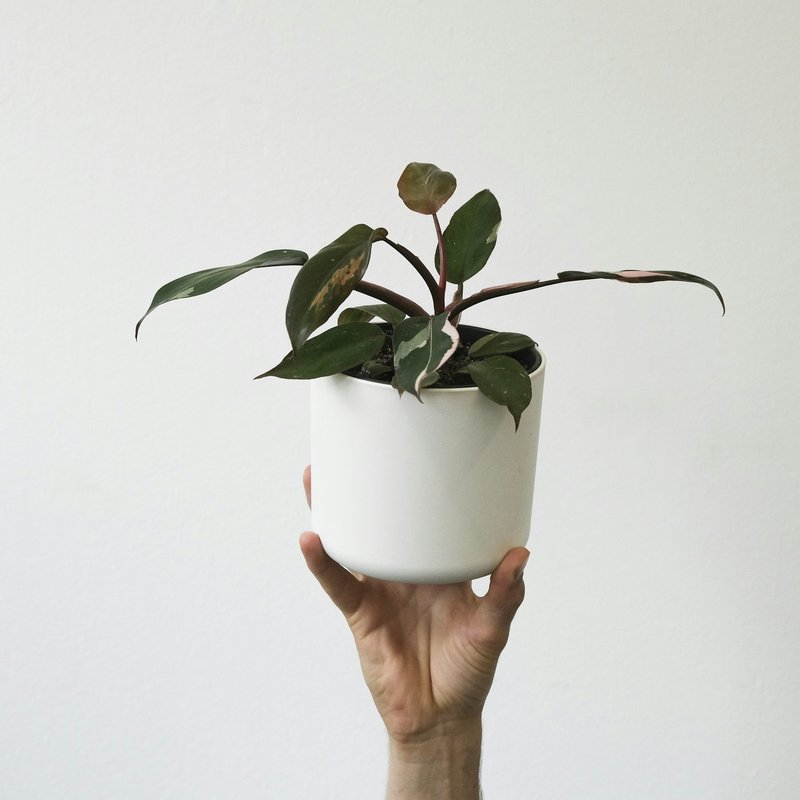
Philodendron Pink Princess
Philodendron erubescens 'Pink Princess'
A chimeric mutation, not a hybrid. Variegation levels vary plant to plant and leaf to leaf, which is the point.
Buy this plant $75 In Stock- Light
- Bright Indirect
- Humidity
- 50-60%
- Temperature
- 65-80°F
Light Requirements
Bright Indirect. Place within 3-5 feet of a south or east-facing window, out of direct sun. Direct afternoon sun will scorch leaves.
Watering
Water thoroughly when the top 2 inches of soil are dry, roughly once a week in spring and summer. In fall and winter, every 10-14 days. When in doubt, wait another day.
Humidity
Target humidity: 50-60%. Average home humidity of 40-50% is usually sufficient. Avoid placing near heating vents, which dry the air significantly.
Temperature
Keep between 65-80°F. Avoid cold drafts from windows in winter and hot air from vents year-round. Most tropical houseplants suffer below 55°F and should never be exposed to frost.
Soil and Potting
Equal parts standard potting soil, perlite, and orchid bark. This aroid-style mix drains fast enough to prevent root rot while holding some moisture.
Propagation
Take a stem cutting with at least one node and 2-3 leaves, including pink variegation in the cutting to propagate that trait. Root in water or moist sphagnum moss under bright indirect light. Roots develop in 2-4 weeks; moss rooting reduces transplant shock versus water rooting.
Common Problems
If new leaves emerge solid green, the plant needs more light. Prune back to the last variegated node to encourage pink growth. Fully pink leaves cannot photosynthesize and will brown; remove them before they drain energy from the plant.
Worth Knowing
- The Pink Princess is a chimera, containing two genetically distinct cell populations in the same plant. The pink sections are caused by anthocyanin pigment in cells that lack chlorophyll, arising from a mutation in the apical meristem.
- The plant's origin is genuinely unknown. A Florida grower claimed to have hybridized it from seven parent plants in the 1970s, but a botanist found some claimed crosses were genetically impossible. The most likely explanation is a spontaneous mutation.
- It was never patented, which is unusual for a cultivar this distinctive. No record of it appears in the detailed records of R.H. McColley's dominant philodendron breeding program of that era.
Toxicity
Toxic to cats and dogs. Contains calcium oxalate crystals causing oral irritation, excessive drooling, and GI upset if ingested.