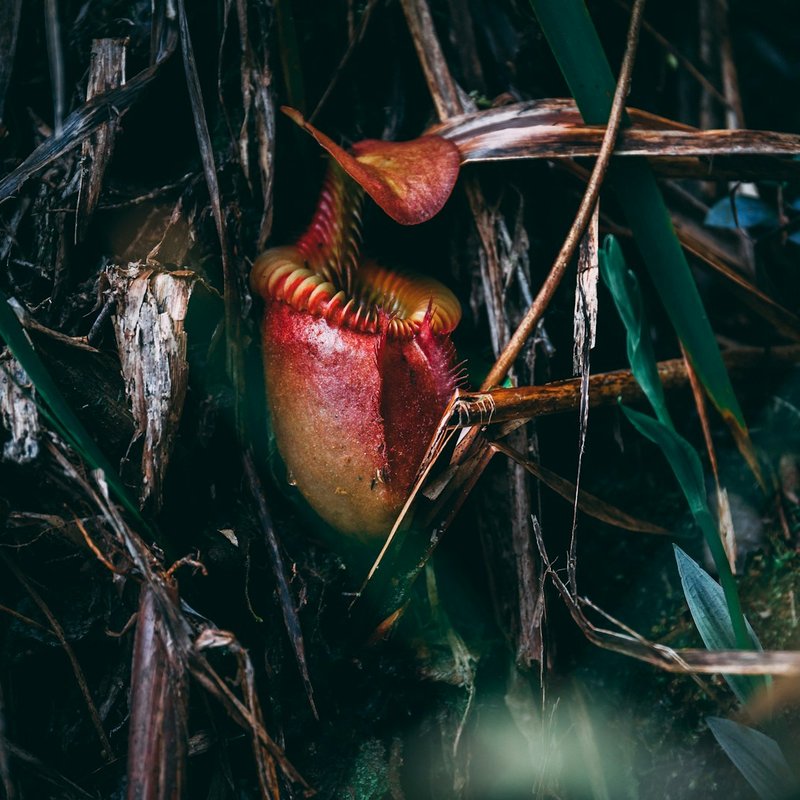
Tropical Pitcher Plant
Nepenthes ventricosa
Feeds itself by trapping and digesting insects in its pitchers. Requires distilled or rainwater only and no fertilizer in the soil.
Buy this plant $28 Seasonal- Light
- Bright Direct
- Humidity
- 60-80%
- Temperature
- 55-80°F
Light Requirements
Bright Direct. Needs several hours of direct sun each day. A south or west-facing window without obstruction is ideal.
Watering
Keep the soil consistently moist, but use only pure rainwater, distilled water, or reverse osmosis water. Tap water will slowly kill it over weeks and months, not dramatically, just a steady decline. Check the pitchers occasionally: they should contain some fluid naturally because the plant produces it. Don't top them off; that's the plant's job. And don't let it sit in standing water. Despite what its dramatic appearance suggests, it's not a bog plant.
Humidity
Target humidity: 60-80%. A room humidifier is the most reliable solution. Pebble trays and misting provide minimal benefit compared to a small ultrasonic humidifier near the plant.
Temperature
Keep between 55-80°F. Avoid cold drafts from windows in winter and hot air from vents year-round. Most tropical houseplants suffer below 55°F and should never be exposed to frost.
Soil and Potting
Low-nutrient, fast-draining, and porous. Never use regular potting soil or anything with fertilizer added. The standard mix is 50/50 long-fibered sphagnum moss and perlite. It should feel like a damp sponge, not wet, not soggy. If you fertilize this plant, you're essentially breaking the one rule.
Propagation
Sterilize your scissors with alcohol first. Take a stem tip with at least one node and one or two leaves, then place it in barely moist long-fibered sphagnum moss. Keep humidity high using a bag or terrarium setup. Rooting takes 4-12 weeks, and growth after rooting is slow. Like, really slow. This is not a plant for impatient propagators.
Common Problems
No pitchers forming, or pitchers dying before they open, are your main warning signs. Both usually mean insufficient light or humidity. Fungal issues show up when humidity is high but there's no air movement, so make sure it gets some circulation. If all the pitchers die at once, check for root rot or a sudden environmental change like a cold window in winter.
Worth Knowing
- The common name 'monkey cups' comes from wild monkeys occasionally drinking from Nepenthes pitchers. The fluid inside is mostly water that the plant secretes itself. The digestive enzymes only activate after an insect falls in and triggers the process.
- N. ventricosa is one of the most variable Nepenthes species out there, with pitcher color ranging from solid green to deep crimson to near-white. The lower pitchers and upper pitchers on the same plant are also shaped differently from each other, which surprises most people the first time they see it.
- Many plants sold as N. ventricosa in nurseries are actually N. x ventrata, a natural hybrid with N. alata. The hybrid is more adaptable and easier to grow, which is exactly why it's everywhere. If yours is thriving on a windowsill, it might not be a pure ventricosa.
Toxicity
Non-toxic to cats, dogs, and humans. The pitcher fluid may cause mild stomach upset if consumed in large quantities, but you'd have to be really committed to making that happen.