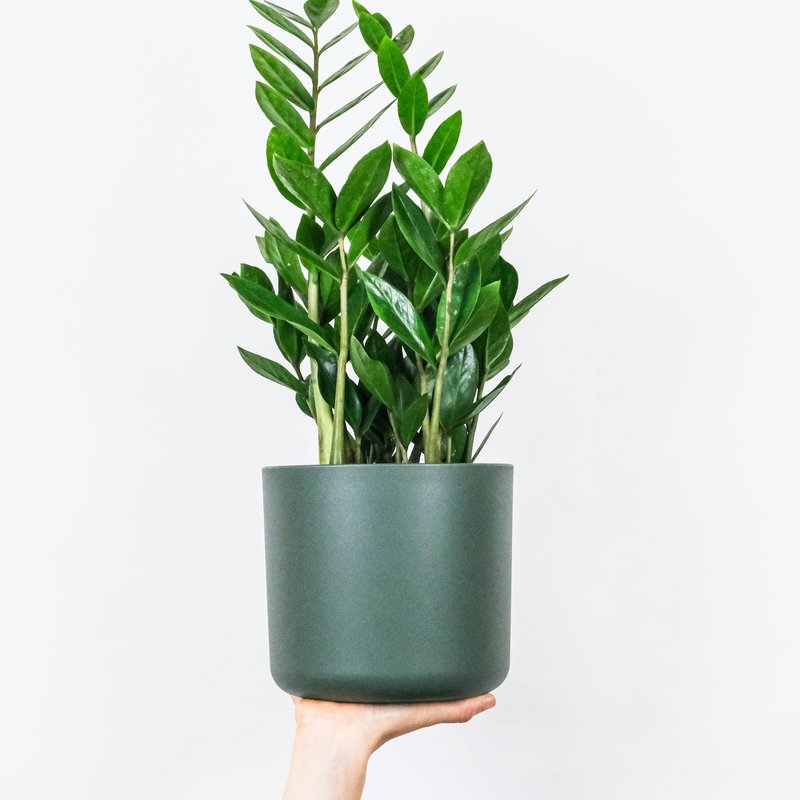
ZZ Plant
Zamioculcas zamiifolia
It survives real low light and months of neglect. Underground rhizomes store water like a backup tank, which gives you a wide margin for error on watering.
Buy this plant $22 In Stock- Light
- Low Light
- Humidity
- 30-50%
- Temperature
- 65-85°F
Light Requirements
Low Light. Tolerates low light better than most plants, but will grow faster with more. A north-facing window works. Avoid deep interior rooms with no natural light.
Watering
Every 2-3 weeks during the growing season, once a month or less in winter. Let the soil dry out completely between waterings. The rhizomes underground store water like tubers, so underwatering is far less dangerous than overwatering. If you're not sure, wait.
Humidity
Target humidity: 30-50%. Average home humidity of 40-50% is usually sufficient. Avoid placing near heating vents, which dry the air significantly.
Temperature
Keep between 65-85°F. Avoid cold drafts from windows in winter and hot air from vents year-round. Most tropical houseplants suffer below 55°F and should never be exposed to frost.
Soil and Potting
Standard potting soil mixed 50/50 with perlite or coarse horticultural sand. Cactus mix works great too. Drainage is the only priority here. Don't overthink it.
Propagation
Division is fastest. Separate the rhizomes in spring, repot each section with at least one stem and some roots attached, and wait 3-5 days before watering. Stem cuttings in water root in 4-8 weeks with a small rhizome forming at the base before any new stem growth appears. Patient people get new plants eventually.
Common Problems
Yellow leaves almost always mean overwatering or waterlogged soil. If your pot is literally cracking, the rhizomes have outgrown it and it's time to repot. It's pretty pest-resistant but check the leaf axils for mealybugs occasionally.
Worth Knowing
- ZZ plants show up in traditional Tanzanian medicine as a treatment for earache and inflammation. The juice gets applied topically. It's been used in its native East Africa long before Dutch nurseries decided it would look good on a shelf.
- It's the only species in the entire genus Zamioculcas. One genus, one plant. Its closest relatives aren't even in the same family. It's taxonomically in a category of its own.
- Dutch nurseries started marketing it as a houseplant in the late 1990s and it spread globally within a decade. Before that, outside of East Africa, almost nobody had heard of it. The plant had a decade-long world tour and landed in every office lobby on earth.
Toxicity
Toxic to cats, dogs, and humans. All parts contain calcium oxalate crystals. Wear gloves when handling it, the sap can irritate your skin.